
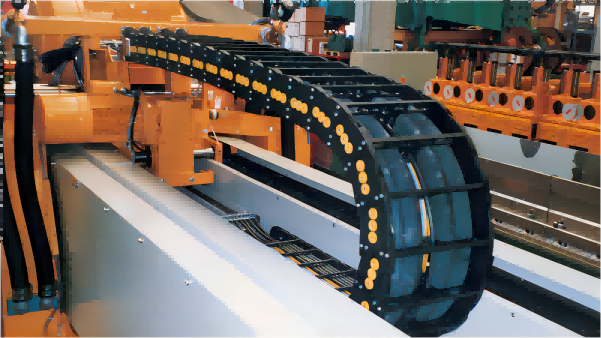
Drag chain cables, also known as moving cables, flexible cables, or cable carrier cables, represent a specialized category of industrial cabling designed specifically for applications requiring constant movement, flexing, and bending. Unlike standard static cables, drag chain cables are engineered to withstand millions of bending cycles while maintaining signal integrity and power transmission. This article provides a comprehensive overview of drag chain cables, their classifications, differences from conventional cables, proper usage guidelines, application requirements, and installation techniques.
What Are Drag Chain Cables?
Drag chain cables are specially constructed electrical cables designed to operate within cable carrier systems (also called drag chains, energy chains, or cable carriers). These systems guide and protect cables and hoses that travel with moving machine components in automated equipment. The primary purpose of drag chain cables is to deliver power, data, or signals to moving parts while enduring continuous flexing, twisting, and bending motions without premature failure.
These cables feature specialized construction elements including high-flex stranded conductors, optimized insulation materials, special stranding patterns, and jacket compounds engineered for continuous motion. They are commonly found in manufacturing automation, robotics, CNC machinery, material handling systems, and other dynamic industrial applications.
Types of Drag Chain Cables
Drag chain cables can be categorized in several ways:
By Construction Type
- Class 5 & Class 6 Fine Stranded Copper: Higher strand counts than standard cables
- Special Stranding Configurations: Concentric, layered, or bundled conductor arrangements
- Shielding Types: Braid shields, foil shields, or combination shielding for EMI protection
By Application Function
- Power Cables: For electrical energy transmission (single and multi-phase)
- Data/Signal Cables: For communication and control signals (Ethernet, Profibus, DeviceNet)
- Hybrid Cables: Combined power and data conductors in a single jacket
- Fiber Optic Cables: For high-speed data in moving applications
By Movement Pattern
- 1D Movement Cables: For linear back-and-forth motion
- 2D Movement Cables: For motion in a single plane
- 3D Movement Cables: For complex multi-axis movement patterns
By Environmental Rating
- Standard Industrial Grade: General manufacturing environments
- Oil-Resistant Cables: For exposure to lubricants and coolants
- Flame-Retardant Cables: For applications requiring fire safety
- Low-Temperature Cables: For refrigeration and cold storage applications
- High-Temperature Cables: For foundries and heat-intensive processes
Drag Chain Cables vs. Standard Fixed Cables
The differences between drag chain cables and conventional fixed installation cables are substantial:
Construction Differences
- Conductors: Drag chain cables use finer stranding (often 2-3 times more strands) than standard cables
- Insulation: Specialized compounds with higher elasticity and recovery properties
- Jacket Materials: More flexible, abrasion-resistant compounds like PUR (polyurethane), TPE (thermoplastic elastomer), or specialized PVC
- Internal Structure: Often feature anti-wicking elements, optimized lay lengths, and special separator layers
Performance Characteristics
- Flex Life: Drag chain cables endure millions of cycles versus thousands for standard cables
- Tensile Strength: Engineered to handle repeated tension and compression forces
- Twist Resistance: Special constructions prevent conductor damage from torsion
- Cold Flexibility: Maintain flexibility at lower temperatures than standard cables
Cost Considerations
Drag chain cables typically cost 2-5 times more than standard cables due to specialized materials and manufacturing processes. However, their extended service life in dynamic applications makes them more cost-effective in the long run by reducing downtime and replacement frequency.
Proper Usage Guidelines for Drag Chain Cables
To maximize the service life and reliability of drag chain cables, several best practices should be followed:
Bending Radius Requirements
Always maintain the minimum bending radius specified by the manufacturer (typically 7.5-12.5 times the cable diameter when static, larger when in motion). Exceeding these limits causes premature conductor fatigue and insulation damage.
Filling Ratio and Cable Arrangement
- Fill cable carriers to only 60-70% capacity to allow cables freedom of movement
- Separate power and data cables with dividers to prevent electromagnetic interference
- Position thicker, stiffer cables on the outside of bends and more flexible ones toward the inside
- Use cable organizers and separation elements within the carrier
Motion Parameters
- Limit acceleration to less than 10m/s² and speed to under 3m/s for most standard drag chain cables
- For high-speed applications (up to 5m/s), select cables specifically rated for high dynamic performance
- Consider travel distance – longer travel distances require special design considerations
Environmental Factors
- Select jacket materials appropriate for environmental exposure (oil, chemicals, UV, temperature)
- Ensure adequate protection from sharp edges, pinch points, and abrasive surfaces
- Consider internal heating effects during high-cycle applications
Applications Requiring Drag Chain Cables
Drag chain cables are essential in any application involving repetitive movement. Critical applications include:
Industrial Automation
- Automated assembly lines with moving robotic arms
- Pick-and-place systems
- Packaging machinery
- Conveyor systems with moving parts
Machine Tools
- CNC machining centers
- Laser cutting systems
- Milling machines
- 3D printers with moving print heads
Material Handling
- Automated guided vehicles (AGVs)
- Overhead cranes and gantries
- Palletizing systems
- Robotic welding cells
Medical Equipment
- Medical imaging systems with moving components
- Robotic surgical assistants
- Laboratory automation systems
Entertainment and Stage Equipment
- Moving light fixtures
- Stage rigging systems
- Automated camera systems
Installation Best Practices for Drag Chain Cables
Proper installation is crucial for maximizing the service life of drag chain cables:
Cable Carrier Selection
- Choose carriers with appropriate internal dimensions to accommodate all cables at less than 70% fill capacity
- Ensure carrier bend radius matches or exceeds cable minimum bend radius requirements
- Select carrier construction material (plastic, steel) appropriate for load, speed, and environment
Cable Preparation
- Remove all packaging and allow cables to relax for 24 hours before installation
- Avoid twisting cables during installation
- Do not strip or prepare ends until after installation to prevent unraveling
Fixing Points
- Securely fix both ends of the cable: one at the stationary point, one at the moving component
- Provide adequate strain relief at both fixed and moving ends
- Use flexible strain relief elements designed for dynamic applications
- Leave sufficient cable length between fixing points and carrier entry points (typically forming a “service loop”)
Tension Management
- Maintain appropriate tension—neither too tight nor too loose
- Cables should move freely within the carrier without binding
- For vertical applications, consider the effects of gravity and use appropriate support elements
Maintenance Practices
- Implement regular inspection routines to check for early signs of wear
- Clean carriers to prevent debris accumulation that could damage cables
- Monitor for unusual noise, which often indicates cable binding or damage
- Replace the entire set of cables in a carrier when the first cable shows significant wear