
Understanding WDZ-YJY Cu/XLPE/LSZH Cable: Decoding the Technical Designation
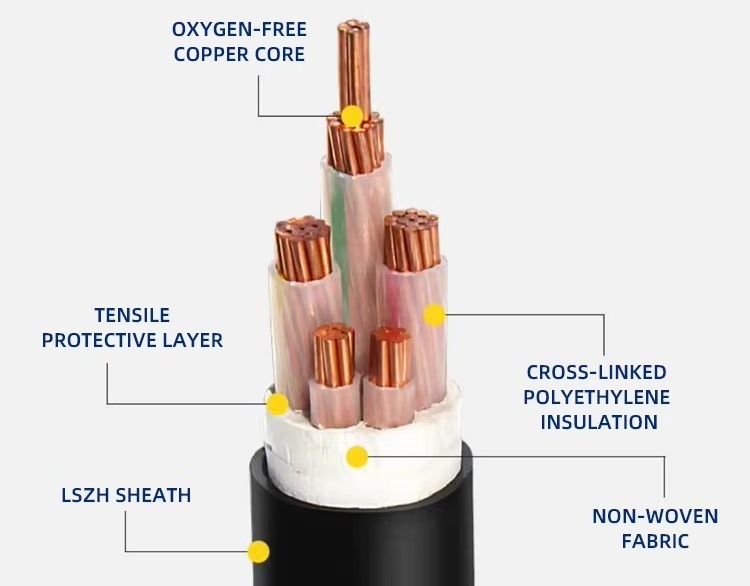
What Each Component Means
The designation “WDZ-YJY Cu/XLPE/LSZH” contains crucial information about this cable’s construction and capabilities:
- WDZ: Stands for “Wu-Di-Zu” in Chinese classification, indicating low smoke, low toxicity, and flame retardant properties
- YJY: Represents cross-linked polyethylene insulation with polyolefin sheathing
- Cu: Denotes copper conductors for optimal electrical performance
- XLPE: Cross-Linked Polyethylene insulation offering superior thermal and electrical properties
- LSZH: Low Smoke Zero Halogen compound for the outer sheath
This combination creates a cable that delivers exceptional electrical performance while dramatically reducing hazards during fire incidents—making it ideal for safety-critical applications where human evacuation time is precious.
Technical Specifications and Performance Characteristics
Electrical Performance
WDZ-YJY cables typically feature:
- Voltage ratings of 0.6/1kV for general power distribution
- Operating temperature range from -20°C to +90°C
- Short circuit temperature capability up to 250°C
- Excellent dielectric strength from XLPE insulation
- Low electrical losses even under heavy load conditions
Safety Specifications
The true value of WDZ-YJY cables lies in their safety performance:
- Smoke Density: Produces less than 40% smoke density during combustion (compared to 80%+ for standard PVC cables)
- Halogen Content: Virtually zero halogen emissions when exposed to fire
- Flame Propagation: Self-extinguishing properties with limited flame spread
- Toxicity Index: Significantly lower toxic gas emissions during combustion
- Dripping Resistance: No flaming droplets that could spread fire vertically
These specifications aren’t merely technical details—they translate directly to increased evacuation time and reduced equipment damage during fire emergencies.
Key Applications: Where WDZ-YJY Cables Deliver Maximum Value
Building Infrastructure
Modern high-rise buildings increasingly specify WDZ-YJY cables for:
- Emergency lighting circuits
- Fire alarm and suppression systems
- Elevator power supplies
- Hospital critical power systems
- Data center power distribution
- Public transportation terminals and stations
Industrial Applications
Manufacturing facilities rely on these cables for:
- Control room wiring
- Process control systems
- Clean room environments
- Food processing facilities (where toxic emissions could contaminate products)
- Offshore platforms and marine vessels
Public Infrastructure Projects
Municipal projects benefit from WDZ-YJY cables in:
- Underground rail systems and subway tunnels
- Airport terminal electrical systems
- Educational institutions and libraries
- Government buildings and emergency response facilities
- Sports arenas and entertainment venues
Why WDZ-YJY Outperforms Traditional Cable Options
Compared to PVC-Insulated Cables
While PVC cables remain common due to lower initial costs, WDZ-YJY cables offer compelling advantages:
- Safety: PVC releases hydrochloric acid and dense black smoke when burned
- Corrosion Prevention: LSZH materials won’t corrode sensitive electronic equipment during fires
- Regulatory Compliance: Meets increasingly stringent building codes worldwide
- Long-term Value: Reduced insurance premiums and lower liability exposure
Compared to Other Flame-Retardant Options
WDZ-YJY stands apart from other fire-resistant cables by addressing all aspects of fire safety:
- Not just flame resistance, but smoke density control
- Not just heat resistance, but toxicity reduction
- Not just fire performance, but maintaining circuit integrity longer
Installation Best Practices for WDZ-YJY Cables
Handling and Preparation
- Store cables in dry conditions away from direct sunlight
- Allow cables to acclimate to installation temperature before handling
- Use appropriate pulling grips to prevent conductor damage
- Maintain minimum bending radius of 15× cable diameter during installation
Termination Considerations
- Use connectors specifically rated for XLPE-insulated conductors
- Ensure proper torque specifications are followed for all connections
- Maintain separation between power and data cables to prevent interference
- Document all installations with proper labeling at termination points
Regulatory Compliance
WDZ-YJY cables typically comply with international standards including:
- IEC 60502 (International Electrotechnical Commission)
- BS 6724 (British Standards)
- EN 50575 (European fire classification)
- GB/T 12706 (Chinese national standards)
Always verify local code requirements before installation, as fire safety regulations vary by jurisdiction.
Total Cost of Ownership: Beyond Initial Purchase Price
While WDZ-YJY cables may carry a 15-30% premium over standard cables, their total value proposition includes:
- Insurance Benefits: Many insurers offer reduced premiums for LSZH cable installations
- Maintenance Savings: XLPE insulation provides longer service life in demanding environments
- Business Continuity: Reduced downtime following minor fire incidents
- Asset Protection: Prevents secondary damage to electronics from corrosive gases
- Reputation Management: Demonstrates commitment to occupant safety and environmental responsibility
Future-Proofing Your Electrical Infrastructure
As building codes worldwide increasingly mandate LSZH cables in public and high-occupancy spaces, installing WDZ-YJY cables today positions your facility for tomorrow’s requirements. With many municipalities accelerating adoption of stricter fire safety standards following high-profile incidents, this cable type represents not just a technical specification but a strategic investment in long-term compliance.
Selecting the Right WDZ-YJY Cable Supplier
When sourcing these critical components:
- Verify manufacturer certifications and testing documentation
- Request independent fire test reports (not just manufacturer claims)
- Confirm conductor purity meets IACS standards
- Evaluate supplier technical support capabilities
- Check warranty terms specific to fire performance characteristics
Frequently Asked Questions About WDZ-YJY Cables
Q: Can WDZ-YJY cables be installed in the same conduits as data cables?
A: Yes. The low electromagnetic interference characteristics of WDZ-YJY cables make them suitable for shared pathways with data and communication cables. Their stable dielectric properties minimize signal interference, unlike some older cable types.
Q: How does the price of WDZ-YJY compare to similar safety-rated cables?
A: WDZ-YJY typically costs 30-50% more than standard PVC cables but 40-60% less than mineral-insulated (MI) cables. The price premium over PVC is offset by reduced installation costs compared to MI cables and superior flexibility.
Q: Are there armored versions of WDZ-YJY available for direct burial?
A: Yes. The WDZ-YJY22 variant includes steel tape armor between the insulation and LSZH sheath, making it suitable for direct burial applications and areas requiring mechanical protection. This maintains the low-smoke zero-halogen properties while enhancing durability.
Q: What testing certifications should I look for when purchasing WDZ-YJY cables?
A: Reputable WDZ-YJY cables should carry certifications including IEC 60502-1 (power cables), IEC 60332-1 & -3 (flame retardance), IEC 61034 (smoke emission), and IEC 60754 (halogen acid gas emission). Project specifications may also require regional certifications like UL, CSA, or CPR classification.