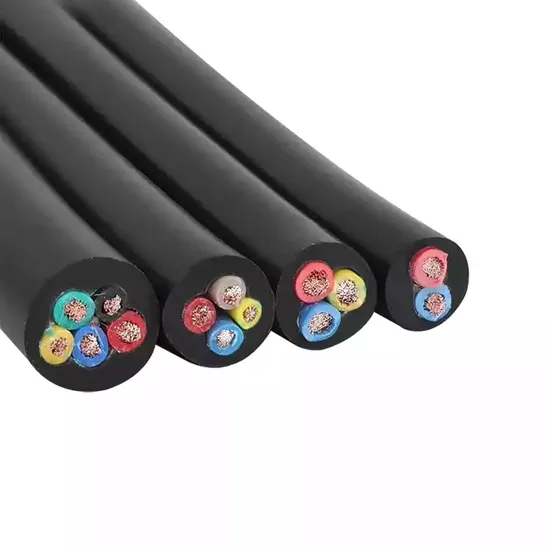
In today’s demanding industrial environments, selecting the right cable for power distribution and equipment connection is crucial for safety, efficiency, and operational continuity. Among the various cable types available in the market, the YCW Heavy Duty Rubber Sheathed Cable stands out as a premium solution for challenging applications. This comprehensive guide explores the technical specifications, unique features, and diverse applications of YCW cables, helping professionals make informed decisions for their specific requirements.
What Does YCW Stand For?
The designation “YCW” represents specific characteristics of this cable type:
- Y: Rubber insulation material
- C: Heavy duty construction
- W: Weather and oil resistance properties for outdoor use
This naming convention immediately communicates the cable’s key attributes to industry professionals, making selection more straightforward.
Technical Specifications and Construction
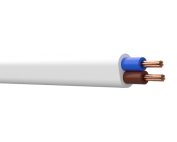
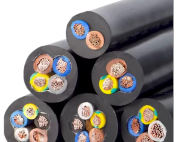
YCW cables are engineered to deliver exceptional performance under harsh conditions. Their construction features multiple layers designed to withstand mechanical stress, environmental factors, and electrical demands.
Core Components
- Conductor: Class 5 flexible copper conductors providing excellent conductivity and mechanical strength
- Insulation: Ethylene Propylene Rubber (IE4 type) offering superior insulation properties and heat resistance
- Sheath: Heavy-duty rubber compound with enhanced weather and oil resistance
Electrical Ratings
- Rated Voltage: 450/750V
- Maximum Operating Temperature: 60°C for continuous operation
- Test Voltage: Typically 2500V for 5 minutes
Available Configurations
YCW cables are manufactured in various configurations to suit different applications:
| Number of Cores |
Cross-Section Range (mm²) |
Typical Applications |
| 1 core |
1.5-400 |
Single-phase power supply |
| 2 cores |
1.0-25 |
Light equipment, tools |
| 3 cores |
1.0-95 |
Three-phase equipment |
| 4 cores |
1.0-150 |
Three-phase with neutral |
| 5 cores |
1.0-25 |
Complex machinery requiring multiple circuits |
Key Performance Characteristics
Mechanical Durability
YCW cables are specifically engineered to withstand significant mechanical stress. Their heavy-duty construction makes them ideal for environments where cables are subject to:
- Frequent bending and movement
- Exposure to crushing forces
- Abrasion from rough surfaces
- Impact from falling objects
Environmental Resistance
The rubber sheathing provides exceptional resistance to:
- UV radiation and extreme weather conditions
- Oil, grease, and various chemicals
- Moisture and humidity
- Temperature fluctuations
Electrical Performance
YCW cables deliver reliable electrical performance with:
- Low electrical resistance
- Excellent insulation properties
- Resistance to electrical tracking
- Stable performance under load variations
Applications of YCW Heavy Duty Cables
YCW cables find extensive use across multiple industries due to their robust construction and versatile performance characteristics.
Industrial Machinery
- Mobile equipment in factories
- Heavy machinery requiring flexible power connections
- Production line equipment subject to movement
Construction Sites
- Power tools and equipment
- Temporary site lighting and power distribution
- Equipment exposed to harsh site conditions
Mining Operations
- Underground equipment requiring flexible, durable cabling
- Mobile mining machinery
- Safety-critical applications demanding reliable power
Agricultural Equipment
- Irrigation systems
- Mobile farming machinery
- Equipment exposed to weather elements and agricultural chemicals
Marine and Port Applications
- Dock equipment
- Ship-to-shore power connections
- Equipment exposed to salt water and marine environments
Installation Best Practices
To maximize the service life and performance of YCW cables, proper installation techniques are essential:
- Bending Radius: Maintain minimum bending radius of 6× cable diameter during installation
- Pulling Tension: Limit pulling tension to prevent conductor damage
- Termination: Use appropriate glands and connectors rated for rubber-sheathed cables
- Routing: Avoid sharp edges and pinch points that could damage the sheath
- Securing: Use cable clamps at appropriate intervals to prevent excessive movement
Comparison with Similar Cable Types
Understanding how YCW cables compare to alternatives helps in selecting the optimal solution:
| Feature |
YCW Cable |
YZ/YZW Cable |
Standard PVC Cable |
| Mechanical Strength |
Heavy duty |
Medium duty |
Light duty |
| Weather Resistance |
Excellent |
Good |
Limited |
| Oil Resistance |
Excellent |
Moderate |
Poor |
| Flexibility |
High |
Very High |
Moderate |
| Temperature Range |
-30°C to +60°C |
-30°C to +65°C |
-15°C to +70°C |
| Typical Use |
Heavy industrial |
Medium industrial |
Indoor applications |
Maintenance and Safety Considerations
Proper maintenance extends the service life of YCW cables and ensures operational safety:
- Regular visual inspections for sheath damage
- Testing insulation resistance periodically
- Immediate replacement of cables showing signs of deterioration
- Proper storage when not in use to prevent UV degradation
- Following manufacturer guidelines for maximum load capacity
Industry Standards and Certifications
Quality YCW cables comply with international standards including:
- IEC 60502 (International Electrotechnical Commission)
- GB/T 5013 (Chinese National Standard)
- Various regional certification requirements
When purchasing YCW cables, verify appropriate certifications for your region and application to ensure compliance and safety.